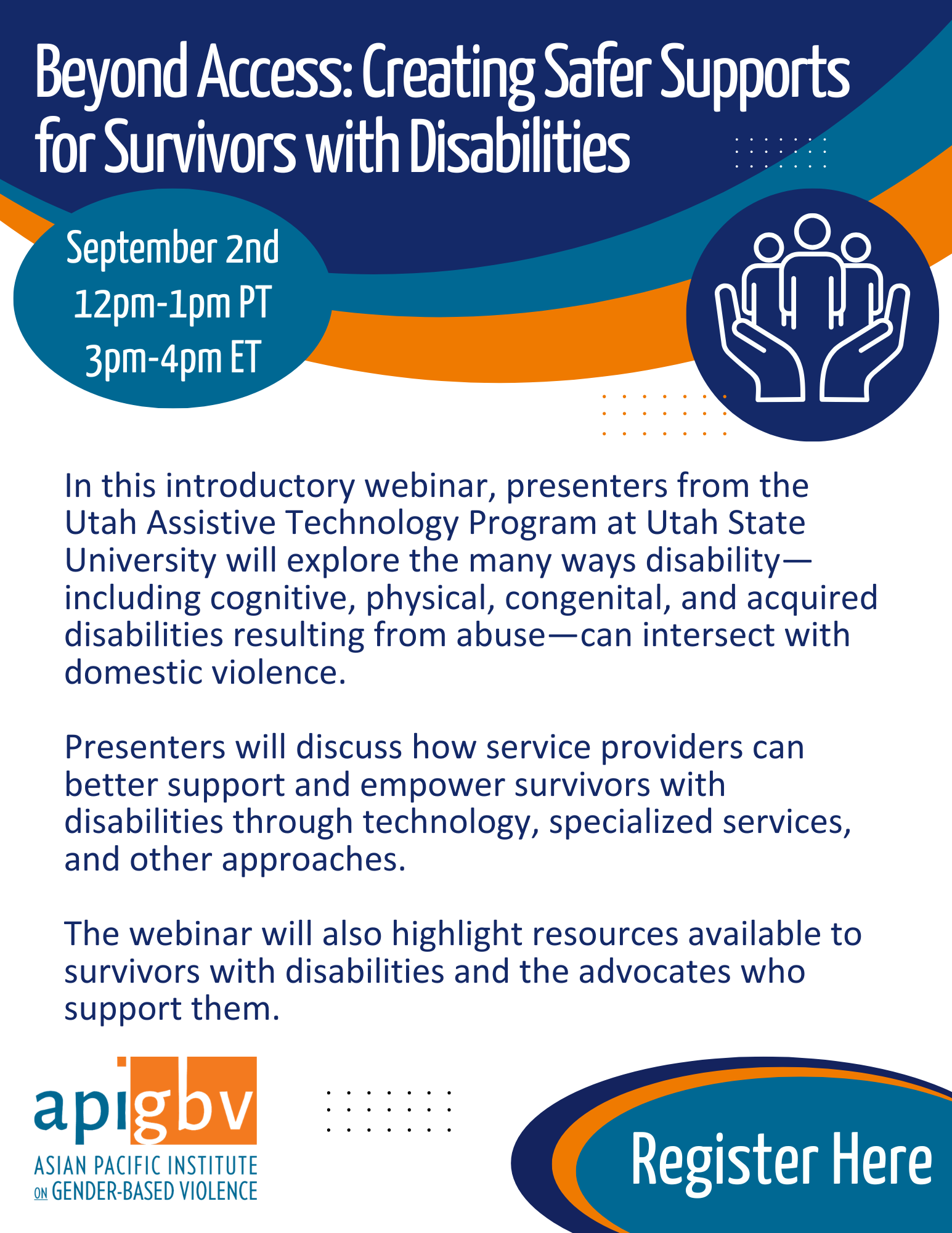
September 2nd, 2026, 12-1pm PT/3-4pm ET
Webinar Overview
Though often used routinely, access is as complex as domestic violence itself. Disability takes many forms and intersects with survivors’ lives in diverse ways, and an accommodation that creates access for one person may erect barriers for another; for example, touch-controlled appliances may support someone with limited hand dexterity while creating barriers for someone who is blind. People with disabilities often face increased vulnerability to power and control tactics and encounter significant barriers when seeking support. Community attitudes shaped by misinformation, ableism, and stigma can further silence, isolate, and invisibilize survivors with disabilities.
In this introductory webinar, presenters from the Utah Assistive Technology Program at Utah State University will explore the many ways disability—including cognitive, physical, congenital, and acquired disabilities resulting from abuse—can intersect with domestic violence. Presenters will discuss how service providers can better support and empower survivors with disabilities through technology, specialized services, and other approaches. The webinar will also highlight resources available to survivors with disabilities and the advocates who support them.
Related Resources
Verbs of Violence Translations
Related Resources API-GBV, Sauti Yetu, and Peaceful Families ProjectTranslated Versions Arabic Dari French Pashto Somali Turkish See English Version Here Share this:
Script Instructions for Working With an Interpreter
Related Resources API-GBV, Sauti Yetu, and Peaceful Families ProjectTranslated Versions Arabic Dari French Pashto Somali Turkish See English Version Here Share this:
Protecting Survivor Privacy: Confidentiality Practices for Culturally Specific Service Providers
August 4th, 2026, 12:30-2pm PT/3:30-5pm ETWebinar Overview This webinar will provide culturally specific service providers, advocates, and legal professionals with practical guidance on survivor privacy, confidentiality obligations, and privilege considerations in...
Sexual Violence in Asian, Asian American, Native Hawaiian, Pacific Islander (AANHPI), and Middle Eastern & North African (MENA) Communities
Sexual violence is defined by the US Center for Disease Control and Prevention as “sexual activity when consent is not obtained or freely given. It impacts every community and affects both sexes and people of all sexual orientations and ages. Anyone can experience or...
Dating and Sexual Violence Among AANHPI Youth
Youth (ages 13 to 24) often use informal terms to describe their romantic or sexual relationships. Just like the relationships they represent, these terms can be fluid or lack discrete definitions. These labels do not necessarily imply that a relationship is exclusive...
Defining Sexual Violence against AANHPI and MENA Communities
Sexual violence is defined by the US Center for Disease Control and Prevention as “sexual activity when consent is not obtained or freely given. It impacts every community and affects both sexes and people of all sexual orientations and ages. This publication provides...
“Insights from a Needs Assessment of Community Health Centers” infographic
This infographic shares key findings from a 2024 needs assessment of 23 AANHPI- and MENA-serving community health centers and community-based organizations on how they are preventing and responding to gender-based violence. It highlights current GBV screening...
Primary Prevention in AANHPI & MENA Communities
Fall 2025 About the Toolkit This toolkit grew out of a need to build evidence and document the ongoing practices, policies, and programs aimed at stopping violence in within Asian American, Native Hawaiian, Pacific Islander (AANHPI) and Middle Eastern and North...